


In the current business world which is moving so fast that to stay in the race, you have to make use of AI tools. These tools are capable of automating tasks, enabling the creation and execution of effective workflows, and generating insights that are in turn changing the way businesses operate. Today we will look at 15 AI tools that will enable you to achieve business productivity at a skyrocketing rate.
Benefits of Using AI Tools in Business
AI tools provide businesses of all sizes with many useful benefits. By incorporating AI into your workflow, you can:
1. Increase Efficiency: AI tools will take over mechanical tasks, thus providing human resources with time to focus on bigger issues. This will enhance productivity and thereby you will be able to do more in less time.
2. Improve Decision-Making: AI tools can parse through enormous amounts of data and give actionable information so that you can make ample decisions in a real-time manner. It allows you to determine the patterns, estimate customers’ behavior, and improve your decision-making directions.
3. Enhance Customer Experience: AI-enabled chatbots and virtual agents that give quick customer care and personalized advice raise customer both satisfaction and loyalty. These tools can take up customer queries anytime, this will speed up the response time and eliminate the customer wait period.
4. Optimize Operations: AI tools can automate the workflow thus saving time, providing pinpointing, and recommending process enhancements. This in turn results in reduced operational costs, quicker turnaround times, and swifter service delivery.
5. Drive Innovation: AI-based tools can stimulate creativity and innovation with their new ideals, market forecasting, and interests in exploring. By leveraging AI capabilities, you can always be one step ahead keeping the continuous improvement processes moving forward.
We’ve already covered why AI technology in business is such a good thing, now let’s move on to the top 15 AI tools that will increase your efficiency tremendously.
AI Tools for Project Management and Task Delegation
Effective project management forms a significant element of business success. AI one of project management tools is able to streamline the workflows, automate repetitive tasks, and include insight in real time to make certain the projects are delivered on time and within the budget. Here are the top 3 AI tools for project management:
1. Trello
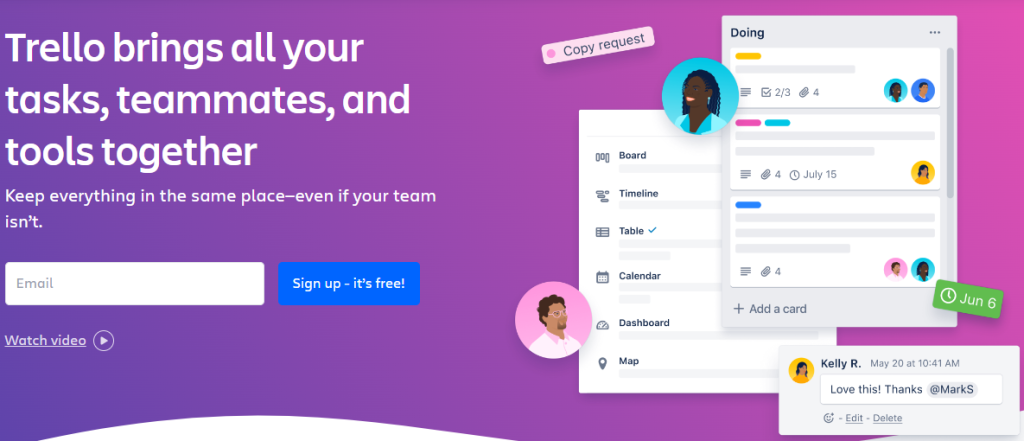
Trello is one of the most widely used project management tools that is enabled with AI in order to perform task delegation and collaboration in the easiest manner. Its user-friendly layout ensures that you can form boards and cards, as well as create checklists. Therefore, you can easily monitor the progress and distribute tasks to all team members. AI-infused automation should help Trello simplify project management tasks and bring everyone on the same page.
Key Features:
- Task Delegation: Assign tasks to team members and track progress.
- Collaboration: Work together in real-time on boards and cards.
- Checklists: Create and manage checklists to ensure tasks are completed.
- Automation: Automate repetitive tasks to streamline workflows.
2. Monday.com

Monday.com provides a visual and configurable platform, which makes project management fairly easy. AI-supported tools on the Monday.com platform, for instance, automatic notifications and resource allocation help teams meet deadlines and deliver projects on time.
Key Features:
- Visual Platform: Easily visualize project progress and timelines.
- Automation: Set up automatic notifications and task reminders.
- Resource Allocation: Efficiently allocate resources to meet project deadlines.
- Customizable Workflows: Tailor workflows to suit your team’s needs.
3. Asana
Asana is a multifaceted system that applies AI to accelerate workflow and enhance teamwork. Its advanced features such as task planning and smart scheduling assist teams to increase their efficiency and enhance their effectiveness.
Key Features:
- Task Planning: Plan and prioritize tasks to meet project goals.
- Smart Scheduling: Schedule tasks and deadlines with ease.
- Teamwork Enhancement: Collaborate with team members and track progress.
- Advanced Reporting: Generate reports to monitor project performance and identify bottlenecks.
Through these AI-enabled project management tools, you may optimize your workloads, reinforce team collaboration, and accomplish work within the budget and time frame.
AI Tools for Customer Relationship Management (CRM)
A variety of AI tools have emerged which in turn serve as replacements for traditional tasks, giving rise to business insights and improving customer relationships. Here are some popular ones:
1. Salesforce
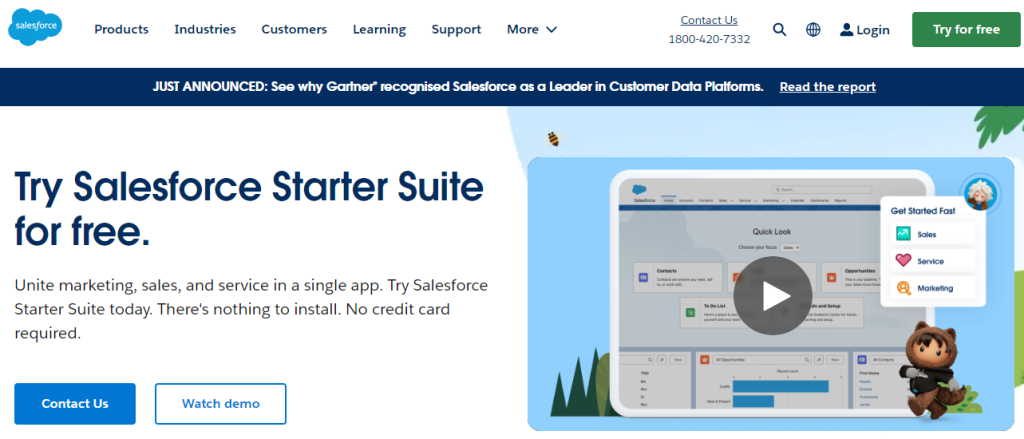
Salesforce, a leading CRM platform, harnesses AI to deliver personalized customer experiences and drive sales growth. Its AI-powered analytics provide valuable insights into customer behavior, enabling businesses to nurture leads and maximize revenue opportunities.
Key Features:
- Personalized Recommendations: Provide tailored product recommendations to customers.
- Predictive Lead Scoring: Identify high-value leads based on predictive analytics.
- Data Collection: Gather customer data to improve targeting and segmentation.
- Sales Automation: Automate sales processes to increase efficiency.
2. HubSpot
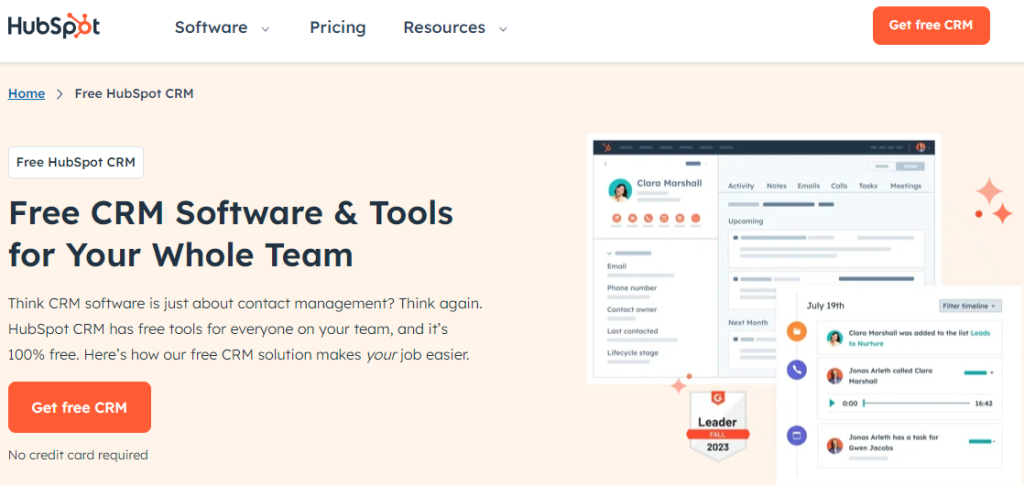
Integrating the AI-based platform with the marketing, sales, and customer support of HubSpot CRM can make it way more effective. These are lead generation, automated email marketing, chatbots, and other technology solutions that help deliver top-notch customer experiences at every touchpoint.
Key Features:
- Lead Generation: Generate leads through inbound marketing and lead nurturing.
- Automated Email Marketing: Send personalized emails based on customer behavior.
- Chatbots: Provide instant support and answers to customer queries.
- Integration: Seamlessly integrate with other marketing and sales tools for a unified approach.
3. Zendesk
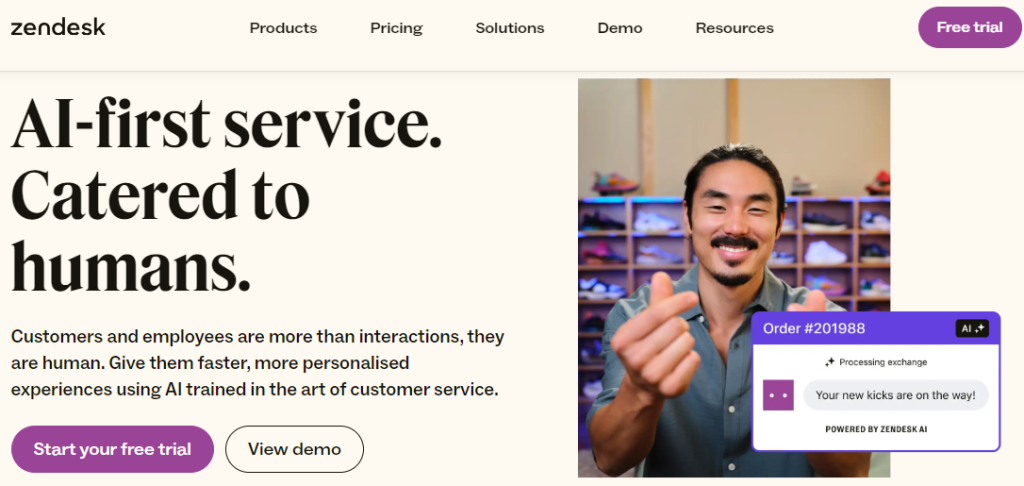
Zendesk’s customer support software streamlines service operations with intelligent chatbots and automated ticket routing. By providing actionable insights, Zendesk enables businesses to deliver exceptional customer service and drive satisfaction.
Key Features:
- AI-powered CRM: Leverage AI to provide personalized customer support.
- Data Analytics: Gain insights into customer behavior and preferences.
- Chatbot Integration: Provide 24/7 support with AI-powered chatbots.
- Multi-channel Support: Engage with customers across multiple channels, including email, chat, and social media.
Through artificial intelligence tools, CRM can automate repetitive tasks, produce analytics to better guide company decisions, and offer individualized communication to customers. Nevertheless, the right method must meet your relevant business requirements and harmonize well with your customer relations Management system infrastructure.
AI Tools for Data Analysis and Predictive Insights
Data analysis plays a vital role in enterprise decision-making, and AI tools can be utilized by businesses to analyze big data sets, spot correlations, and make conclusions about the business process. Here are some AI tools for data analysis and predictive insights:
1. Google Analytics
Google Analytics provides valuable insights into website performance and user behavior, helping businesses optimize marketing strategies and improve user experience. Its robust analytics tools empower businesses to make data-driven decisions and achieve their goals.
Key Features:
- Site Traffic Analysis: Track website visitors and behavior in real-time.
- User Behavior Insights: Understand how users interact with your website and content.
- Conversion Rate Optimization: Identify areas for improvement to increase conversions.
- Custom Reporting: Create customized reports to track key metrics.
2. Tableau
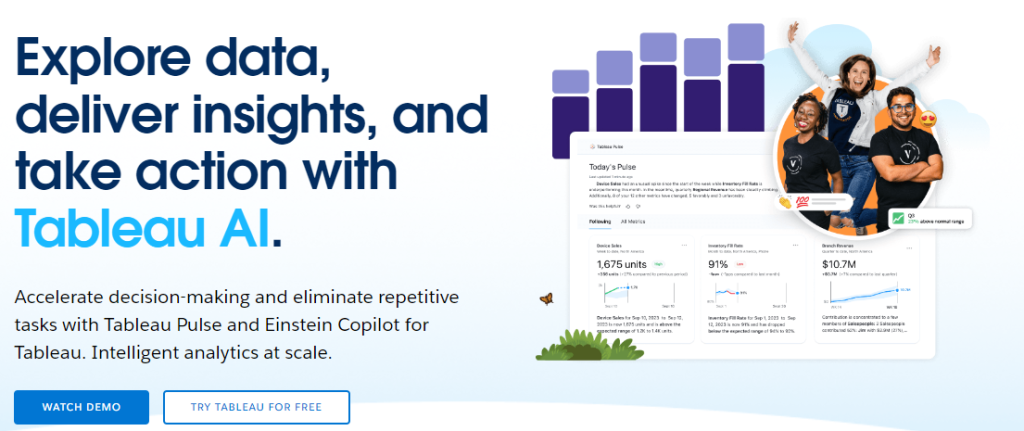
Tableau is a modern analytical report that applies AI to increasing personalized data into business-relevant analysis. All this stemmed from the drag-and-drop interface and interactive dashboards of the product which can be easily used by businesses to understand the data trend, figure out patterns, and discover otherwise hidden opportunities.
Key Features:
- Drag-and-Drop Interface: Easily create interactive visualizations without coding.
- Data Exploration: Explore data from multiple sources to uncover insights.
- Predictive Analytics: Use advanced analytics to forecast future trends and behavior.
- Collaboration: Share insights with team members and stakeholders.
3. IBM Watson Analytics

IBM Watson Analytics is a performance-driven decision-making app that uses AI to help businesses discover insights, perform predictions, and generate reports. Provided with natural language processing functions, traditional users of the system can now analyze volumes of data to quickly derive important insights.
Key Features:
- Natural Language Processing: Analyze unstructured data using natural language processing.
- Predictive Modeling: Build predictive models to forecast future outcomes.
- Data Visualization: Create interactive dashboards to communicate insights effectively.
- Integration: Seamlessly integrate with other IBM and third-party tools for a comprehensive analytics solution.
Using AI-powered analytics tools, customers can get access to valuable data which can later be converted into information and decisions to help businesses achieve their goals.
AI Tools for Content Creation and Marketing
Crafting engaging content that drives traffic to your site is key to a successful content marketing strategy. AI-powered content tools help businesses create and optimize high-quality content, boosting its effectiveness. Here are some AI tools for content creation and optimization:
1. Grammarly
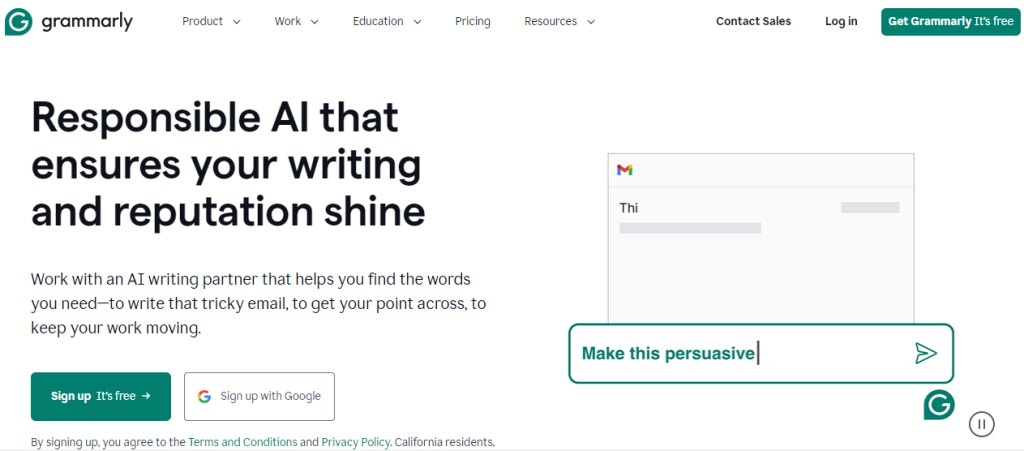
Grammarly is a smart AI-powered grammatical assistant that helps you edit your content without spelling or grammar mistakes. It does not only verify grammar and spelling but also offers hints on the tone and clarity of your writing, which makes proofreading faster and thus your writing better.
- Grammar and Spelling Correction: Ensure error-free writing with AI-powered grammar and spell-check.
- Tone Suggestions: Receive suggestions for improving the tone and clarity of your writing.
- Plagiarism Detection: Detect duplicate content and ensure originality.
- Writing Style Analysis: Get insights into your writing style and improve readability.
2. Canva

Canva, an AI-backed graphic design tool for the ease of creating visual content that is liked by the general public is a popular product. The drag-and-drop mechanism of Canva along with the predesigned templates and AI-powered image recognition powers businesses to generate professional graphics of top-class quality even without suitable design skills.
Key Features:
- Graphic Design: Create professional-looking graphics with drag-and-drop simplicity.
- Templates: Choose from a library of pre-designed templates for various design projects.
- Image Recognition: Use AI-powered image recognition to find the perfect images for your designs.
- Collaboration: Work collaboratively with team members on design projects in real-time.
3. BuzzSumo
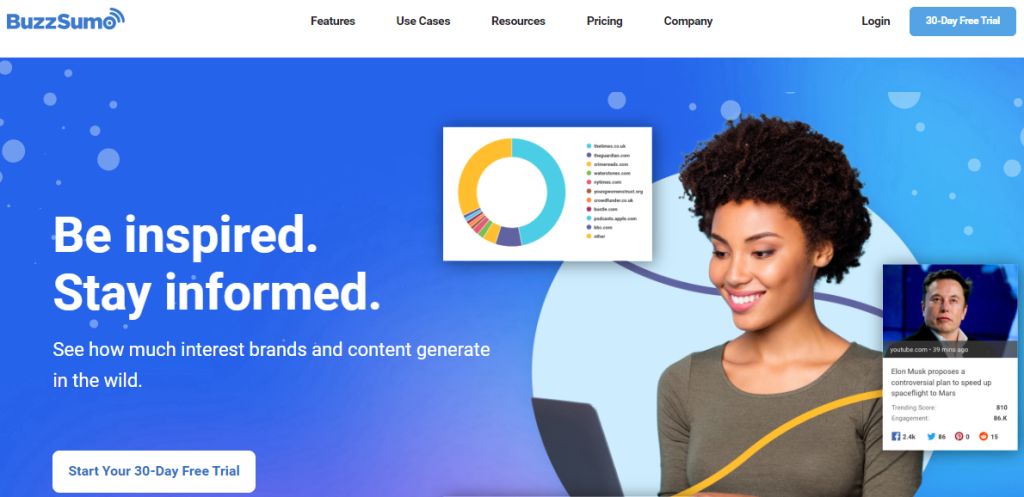
BuzzSumo which leverages AI underpins content marketing of companies by discovering trending topics, examining competitor content, and unearthing high-volume keywords among other functionalities. Through using AI technology, BuzzSumo allows businesses to develop exciting and shareable brand content that resonates with the right audience.
Key Features:
- Trend Analysis: Discover trending topics and content in your industry.
- Competitor Content Examination: Analyze competitor content and identify opportunities.
- Keyword Research: Find high-volume keywords to optimize your content for search engines.
- Content Insights: Gain insights into what type of content resonates with your audience.
AI tools that enhance content creation and optimization can help businesses produce quality content that holds the attention of the audience, enhances their sites’ visibility on search engines, and draws prospective customers to their sites.
AI Tools for Virtual Assistants and Chatbots
Virtual assistants have intruded into our day-to-day lives indispensably and AI virtual assistants do that to the highest level. These AI assistants can execute tasks, suggest ideas, and even guess what you may need. Here are some AI-powered virtual assistants for personalized productivity:
1. Amazon Alexa

Amazon Alexa is a software system that can set alerts, play music, report weather conditions as well and order items that are available all of these are the simple instructions of its designer. It can even complement smart home devices, which can be voice-activated to control your home.
Key Features:
- Task Execution: Execute tasks such as setting reminders and playing music with voice commands.
- Smart Home Integration: Control smart home devices with voice commands.
- Personalization: Customize Alexa’s responses and capabilities to suit your preferences.
- Skills Development: Build custom skills to extend Alexa’s functionality for your business needs.
2. Google Assistant

Google Assistant offers personalized assistance across Google services, enabling businesses to streamline workflows and access information efficiently. Through manual input and commands, businesses can manage tasks and make informed decisions.
Key Features:
- Voice-Activated Commands: Perform tasks and get answers using voice commands.
- Integration with Google Services: Access information from Google Calendar, Gmail, and other Google services.
- Personalized Recommendations: Receive personalized recommendations based on your preferences and usage patterns.
- Task Automation: Automate repetitive tasks using Google Assistant routines.
3. Apple Siri

Apple Siri’s virtual assistant integrates seamlessly with Apple services, offering personalized assistance and hands-free productivity. Through manual interactions and commands, businesses can leverage Siri to stay organized and focused on their goals without AI intervention.
Key Features:
- Integration with Apple Services: Access information from Apple Music, Apple Maps, and iCloud.
- Task Execution: Perform tasks such as sending messages and setting reminders using voice commands.
- Personalized Assistance: Receive personalized recommendations and responses based on your usage patterns.
- Device Control: Control Apple devices and apps using voice commands.
Through the use of virtual assistants with AI-powered powers, enterprises can achieve higher productivity, save time, and replace the repetitive duties by employees thereby using their expertise for more strategic engagements.
How to Choose the Right AI Tools for Your Business
To effectively choose AI tools for your business, one needs to consider their particular needs and objectives. Start with highlighting AI use and benefits in those areas of your business that could be automated or become smart. Secondly, look for AI tools that can be utilized in those parts and evaluate them, taking into account aspects such as user-friendliness, scalability, integration capabilities, and customer feedback.
This also means taking the budget into account as well as the return on investment for each tool. Some AI tools could come at a high price to start with while others have the convenience of subscription-based pricing models. Analyze how much productivity can be expected from each tool and what kind of cost savings they can generate for your business to measure their effectiveness.
Lastly, do not forget to also look at the support and training opportunities that AI tool vendors provide. See that they supply the required user manuals, guidance resources, and customer services to make the AI tools adoption and utilization successful.
Conclusion
AI tools in business processes go a long way in enhancing productivity levels. AI tools fall into many categories from project management to data analysis, customer service, and marketing automation which can optimize operations and measure growth. Through the use of AI, businesses can automate repetitive tasks, garner deep insights, improve collaboration, and make better decisions.
While selecting AI tools for your business, do not forget to be specific about your demands, compare different solutions, and estimate the possible ROI. Make use of AI tools which are a powerful business efficiency factor to stay ahead of the competition game. With an appropriate AI toolkit, you can boost your business efficiency like never before and achieve impressive profits. Don’t wait any longer, use your AI ability wisely today!


